7 Heavenly
Virtues Test
How do you show up in everyday life? Answer real-life questions to discover your strongest virtue and reveal its angel card.
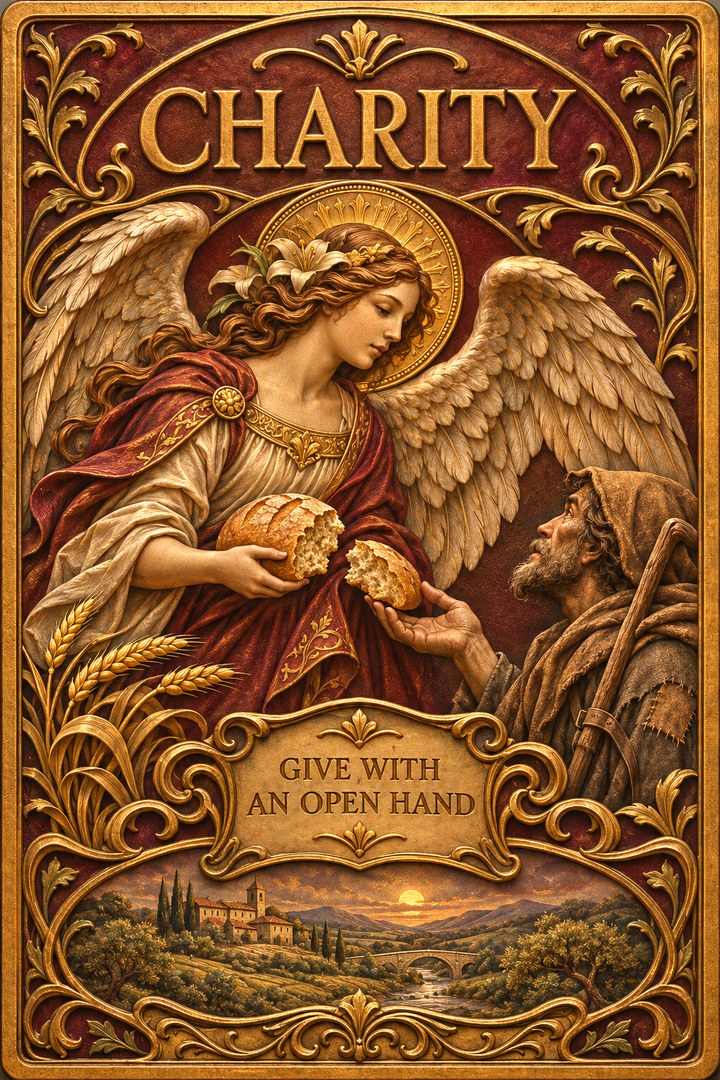
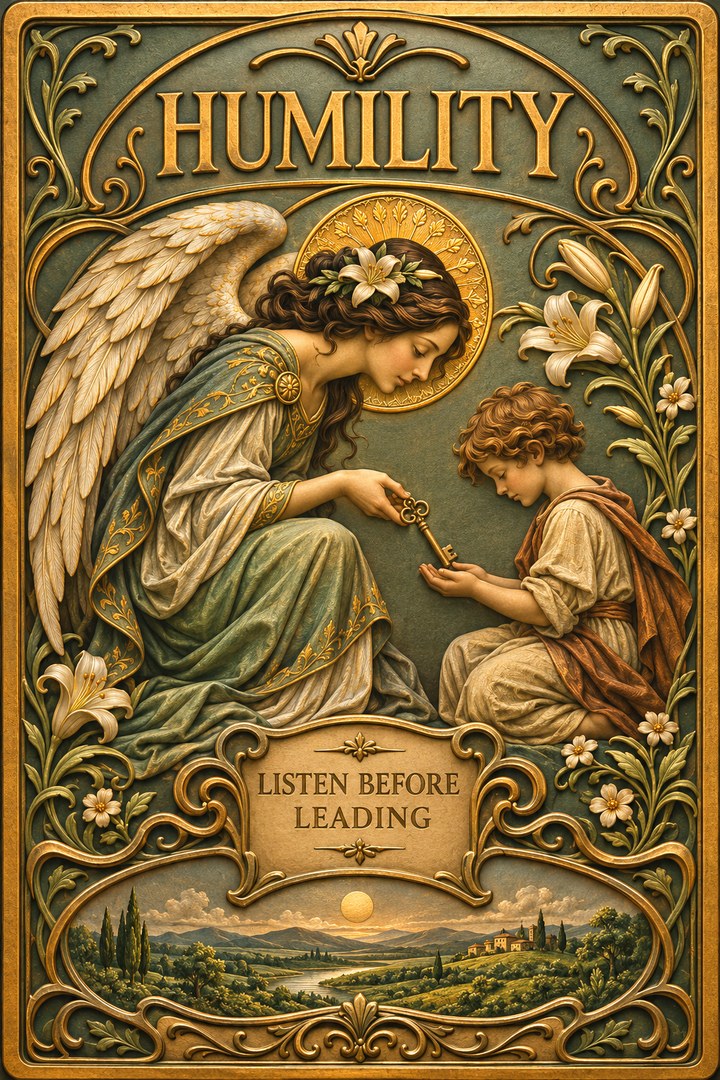
The seven angel cards
Each angel depicts an action that gives its virtue meaning.





How the 7 Heavenly Virtues Test works
Quick Test or Standard Test?
The Quick Test gives you 14 everyday situations, two for each of the seven virtues. Start here if you want to see the full profile in one sitting. The Standard Test includes those same situations and adds two more per virtue. Seeing a quality show up at home, in a group, and in a moment of stress can give you more to think about than a single kind of example.
Pick the response closest to what you would normally do. If two options sound equally plausible, think of a recent situation and choose the one you actually used. You can go back before revealing your results. Switching versions holds your place in each version for the current visit.
What the seven heavenly virtues describe
The seven heavenly virtues are a traditional Christian framework for thinking about character and conduct. This test translates the virtues into present-day situations. You can answer from your own experience regardless of your beliefs. The emphasis is on how you handle an ordinary choice, such as sharing credit, keeping someone’s confidence, or getting back to a task after a setback. For a broader look at character and conduct, see Stanford’s introduction to virtue ethics.
Humility is being able to see your own contribution clearly alongside everyone else’s. It shows up when you can ask for help, correct your own account of what happened, or recognize a teammate whose work went unseen. The angel on the card kneels to return a key to a child. The gesture makes the focus clear. What matters is getting the key back to the person who needs it.
Charity is giving something useful with consideration for the person receiving it. Sometimes that means sharing money or supplies. It can also mean taking time to make an introduction, help with a move, or read an application carefully. The angel divides a loaf with a traveler. Both the resource and the need are right there in the scene.
Chastity is interpreted here as acting with care and integrity in intimate situations. The questions ask how you respond when someone changes their mind, when a confidence becomes gossip, or when your own boundaries become uncomfortable to state. The angel’s lily symbolizes care for what is private, and the raised hand makes a boundary visible.
Kindness begins with noticing how a moment feels for someone else. A person who made a mistake in public might need a little privacy. Someone new in a group might appreciate an invitation they can freely turn down. The angel tending a wounded dove shows a kind of care small enough to miss and important enough to stop for.
Temperance is the ability to decide when you have had enough and make room for other needs. The situations include deciding whether to keep scrolling, stay up or buy something on impulse. The angel pours water between two vessels. The steady stream illustrates how a limit can be chosen and applied without wasting what is already there.
Patience is staying steady through a delay, especially when someone else is learning or circumstances are outside your control. You might try a different explanation, give someone a chance to answer, or rearrange a plan while a decision is pending. The unopened rose beside the angel is a reminder that some of the changes we want take time.
Diligence is returning your attention to the task and seeing the details through. It looks like checking whether a fix worked, finding time for a recurring practice, or setting up a way to restart after you miss a day. The angel engraving a small star concentrates on the cut right in front of them.
How the scores and radar chart work
Each question contributes to one virtue. Responses are scored on a scale from zero to three based on how directly they reflect that virtue in the situation. For each virtue, your earned points are divided by the points available in the version you took, then displayed as a rounded percentage. Every virtue has the same number of questions within a version, so each has the same opportunity to lead.
The leading virtue has your highest score. When several virtues share the top score, you can view each of their cards. The chart puts the seven virtues around a circle. A point close to the outside means a higher score on that axis. The adjacent list gives the percentage for each virtue. For example, in the Quick Test, four earned points out of six available for a virtue display as 67%.
A profile with several similar scores makes it harder to single out one strength. An uneven profile can give you a more specific place to reflect. Look for the situation behind a score. If you wait easily in line but get impatient with people you are teaching, your next step might be practicing a different way to explain something when a person needs another try.
Questions about the test
Is the test free?
Yes. You can take either version, see the seven scores, and download the angel card for your result without a site account. A social platform may ask you to sign in before you publish your card or result link there.
Can I get a different leading virtue on the Standard Test?
Yes. The added questions cover new situations. If you react differently at work, at home, and under pressure, the extra questions can shift the relative scores. The same percentage in the two versions can also come from different response choices.
Do the scores measure moral character?
The scores summarize your self-reported choices in this quiz. Use them as prompts for reflection. Your experiences, relationships and beliefs can all affect how you respond to a fictional situation, and the quiz is not a psychological scale or a religious assessment.
What does the result link share?
It opens a public page for the selected angel card and its virtue description. Your individual choices and numeric profile are kept in this browser tab, and the public link carries only the selected virtue. If you select a social platform, that platform handles your post.
How can I share my card on Instagram?
On devices with compatible image sharing, choose Instagram from your phone’s share menu if it appears. You can also save the image, open Instagram, and attach the saved card to a post or story. The image shows the virtue name and the corresponding angel.
Can I retake the quiz?
Yes. Use the retake button below your result to clear the current attempt and go back to the first question. You can also try the other version. If you’re comparing two attempts for yourself, note which version you took and the situations that affected your answers.